Best Online Prescription Skincare Providers of 2026
Compare the best online prescription skincare providers for 2026 — prescription-strength tretinoin, azelaic acid, and custom compounded formulas for acne, melasma, rosacea, and anti-aging.

Strut Health Skincare
- Prescription-strength ingredients unavailable in OTC products
- Licensed provider oversight for personalized custom formulas
- Treats multiple skin conditions: acne, melasma, rosacea, fine lines
- Starting Price:
- Prescription Skincare Treatments from $24.99
- Key Feature:
- Custom prescription formulas, from $24.99, no dermatology visit required
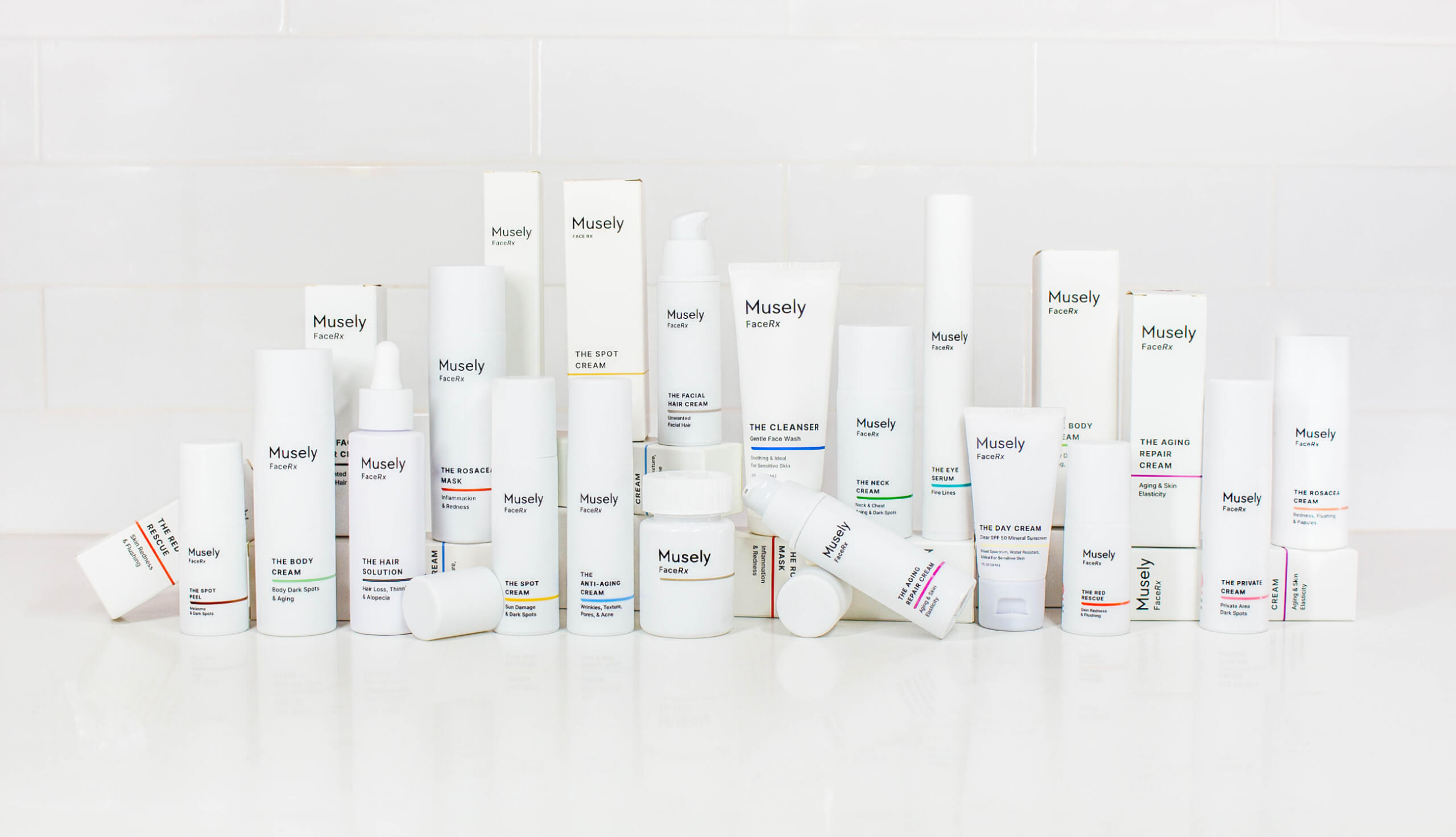
Musely Prescription Skincare
- Board-certified doctor and app check-ins included
- 60-day result guarantee refunds the treatment cost
- Broad catalog: dark spots, aging, hair, menopause
- Starting Price:
- About $50-100/month (brand estimate)
- Key Feature:
- Board-certified doctor, app check-ins, 60-day guarantee
Compare Our Top Picks Side by Side
- 1. Strut Health Skincare4.9
- Starting Price
- Prescription Skincare Treatments from $24.99
- Key Feature
- Custom prescription formulas, from $24.99, no dermatology visit required
- Best for
- Prescription-strength, no dermatologist
Learn More - 2. Musely Prescription Skincare4.3
- Starting Price
- About $50-100/month (brand estimate)
- Key Feature
- Board-certified doctor, app check-ins, 60-day guarantee
- Best for
- Custom prescription skincare with an app
Learn More
Pricing and features are what each provider states publicly and can change. Confirm the details on the provider’s own site before you buy.
Online prescription skincare has made dermatologist-grade treatment accessible without the months-long wait for an in-person appointment. Through telehealth, licensed clinicians can evaluate your skin, prescribe proven active ingredients, and ship custom compounded formulas to your door — often for far less than brand-name products. Whether your concern is acne, signs of aging, melasma, or rosacea, prescription-strength treatment can deliver results that over-the-counter products cannot match. But providers differ in the ingredients they offer, the degree of personalization, and the quality of clinical oversight. This guide explains how online prescription skincare works, which treatments actually work, and how our top-ranked providers compare.
What Is Online Prescription Skincare?
Online prescription skincare uses telehealth to connect you with licensed clinicians — dermatology providers, physicians, or nurse practitioners — who can evaluate your skin and prescribe treatments that require a prescription. The hallmark of the category is custom compounded formulas: a licensed pharmacy combines active ingredients like tretinoin, azelaic acid, niacinamide, and others into a single personalized cream tailored to your skin concerns and tolerance. This is fundamentally different from over-the-counter skincare, which is limited to lower concentrations and cannot include prescription-strength actives like tretinoin. You typically submit photos of your skin and a history of your concerns, a clinician reviews them, and if appropriate, your custom formula is compounded and shipped. The result is professional-grade treatment, personalized to you, delivered with the convenience of a subscription rather than repeated dermatology visits.
How Online Prescription Skincare Works
The process is designed to be simple and photo-based. You complete an online consultation describing your skin concerns, goals, and history, and upload clear photos of your skin. A licensed clinician reviews your submission, and if prescription treatment is appropriate, formulates a personalized regimen — often a single custom compounded cream that combines several actives to address your specific concerns. The formula is prepared by a licensed compounding pharmacy and shipped to your door, usually as an ongoing subscription so you never run out. Many providers let you message the clinical team about your progress or side effects, and can adjust your formula over time — for example, increasing the strength of an active as your skin builds tolerance. This iterative, personalized approach mirrors how a dermatologist would manage your treatment, with the convenience of doing it remotely.
The Prescription Ingredients That Work
The power of prescription skincare comes from access to clinically proven active ingredients at effective strengths. Tretinoin, a prescription retinoid, is the gold standard for both anti-aging and acne — it accelerates cell turnover, boosts collagen, and clears pores, with decades of evidence behind it. Prescription-strength azelaic acid treats acne, rosacea, and pigmentation. Hydroquinone and other agents address melasma and dark spots. Clindamycin and other topical antibiotics target acne-causing bacteria. The advantage of compounding is combining several of these into one formula calibrated to your skin, rather than layering multiple products. Over-the-counter versions of some ingredients exist but at far lower concentrations. Because these actives are potent, clinician oversight ensures the right ingredients and strengths for your skin type and concern — which is exactly what separates effective prescription treatment from guesswork.
What Online Prescription Skincare Can Treat
Prescription skincare addresses a range of common concerns that over-the-counter products often cannot resolve. For acne — from persistent breakouts to hormonal and cystic acne — prescription retinoids, topical antibiotics, and other actives are highly effective. For signs of aging, tretinoin remains the most proven topical treatment for fine lines, texture, and tone. For hyperpigmentation, melasma, and dark spots, prescription-strength agents can fade discoloration that lighter products barely touch. Rosacea, certain forms of which respond well to prescription topicals, is another common target. Some providers also address concerns like keratosis pilaris. What prescription skincare cannot do is diagnose or treat suspicious lesions or skin cancer, which require in-person dermatology. A good provider is clear about this and will direct you to in-person care for anything that needs a hands-on exam.
What to Look For in a Prescription Skincare Provider
Prioritize these factors before price:
- Licensed clinician oversight. A real clinician should review your photos and history and be available to adjust your formula.
- Proven active ingredients. Look for formulas built around evidence-based actives like tretinoin, not unproven proprietary blends.
- Personalization. The best providers tailor the formula to your specific concerns and adjust strength over time.
- Quality compounding. Formulas should come from a licensed compounding pharmacy with proper standards.
- Transparent subscription pricing. Understand the ongoing cost and what each plan includes.
How Much Does Online Prescription Skincare Cost?
Online prescription skincare is often surprisingly affordable, especially compared with brand-name products or in-person dermatology. Custom compounded formulas typically run from around $20 to $50-plus per month on a subscription, which usually bundles the clinical consultation and ongoing adjustments. That single custom cream often replaces several separate products, so the real cost can be lower than a shelf full of over-the-counter serums. When comparing, look at what each plan includes — the actives in your formula, the clinical support, and shipping frequency — and check the ongoing price after any introductory offer. Because prescription actives like tretinoin are inexpensive to compound, you are largely paying for the personalization and clinical oversight, which is precisely what makes the treatment effective. A fair subscription price from a provider with genuine clinician involvement is the best value.
How We Ranked the Best Prescription Skincare Providers
Our team evaluated providers on clinical oversight, the quality and evidence behind their active ingredients, the degree of personalization, compounding pharmacy standards, pricing transparency, and verified customer results. We favored providers with genuine licensed clinician involvement, formulas built on proven actives, and the ability to tailor and adjust treatment over time. Providers relying on unproven blends, offering little personalization, or obscuring their pricing ranked lower. The providers at the top of this page combine dermatology-grade treatment with personalization and value. Our rankings are editorially independent and never influenced by advertisers.
What Results to Expect and When
Setting realistic expectations is essential with prescription skincare, because the most effective ingredients work gradually. With tretinoin, many people experience an adjustment period in the first few weeks — dryness, peeling, or purging, where breakouts temporarily worsen as skin turnover accelerates. This is normal and typically settles. Real improvement in acne usually appears over two to three months, while anti-aging benefits like smoother texture and reduced fine lines build over three to six months and beyond with continued use. Hyperpigmentation also fades gradually. The key is consistency and patience: starting slowly to build tolerance, using sunscreen daily (especially important with retinoids and pigment treatments), and sticking with the routine. A good provider guides you through the adjustment period and adjusts your formula if irritation is excessive, so you can stay on track toward results.
Prescription vs. Over-the-Counter Skincare
Understanding the difference between prescription and over-the-counter skincare clarifies why prescription treatment can succeed where drugstore products plateau. Over-the-counter products are limited by regulation to lower concentrations of active ingredients and cannot include prescription-only actives like tretinoin at all. They can be useful for maintenance and mild concerns, but for stubborn acne, meaningful anti-aging results, or persistent pigmentation, they often simply are not strong enough. Prescription skincare unlocks clinically proven actives at effective strengths, personalized to your skin by a clinician and combined into a single formula. The trade-off is that these potent ingredients require guidance to use safely and an adjustment period, which is exactly why clinician oversight is part of the model. For many people who have exhausted over-the-counter options without the results they want, moving to prescription treatment is the step that finally makes a visible difference — not because drugstore products are useless, but because they are inherently capped in potency.
Building a Complete Skincare Routine
A prescription formula is the centerpiece of an effective routine, but it works best surrounded by a few sensible supporting steps. A gentle cleanser to start, a prescription treatment applied as directed, a simple moisturizer to support your skin barrier and offset the dryness that potent actives can cause, and — most importantly — a daily broad-spectrum sunscreen form the foundation. You do not need an elaborate ten-step regimen; in fact, simplicity often serves prescription skincare better, since piling on too many products increases the risk of irritation and makes it hard to tell what is working. The goal is to let your prescription actives do the heavy lifting while gentle, barrier-supporting products keep your skin comfortable and protected. Your provider can advise on which supporting products complement your formula and which to avoid. A streamlined, consistent routine built around your prescription treatment is more effective — and easier to maintain — than a complicated one.
Common Skincare Mistakes to Avoid
Several avoidable mistakes undermine otherwise good prescription skincare. The most common is impatience — quitting during the adjustment period or before the weeks-to-months timeline that active ingredients require. Another is overuse: applying a potent active too often or too much in hopes of faster results, which usually just causes irritation and setbacks. Skipping sunscreen is a serious error, since many prescription actives increase sun sensitivity and sun exposure worsens the aging and pigmentation you are trying to treat. Combining your prescription with harsh scrubs, strong acids, or too many other actives can overwhelm your skin barrier. And inconsistency — using the treatment sporadically — erodes results, since these actives depend on steady use. Avoiding these pitfalls comes down to following your provider's instructions, being patient, protecting your skin from the sun, and keeping your routine simple and consistent rather than aggressive.
Skincare for Different Skin Types
Effective prescription skincare accounts for your individual skin type, which is a major advantage of the custom, clinician-guided model. Oily and acne-prone skin often tolerates and benefits from stronger actives and lighter formulations, while dry or sensitive skin needs gentler concentrations, more barrier support, and slower introduction of potent ingredients to avoid irritation. Combination skin may need different care in different areas. Skin of color requires thoughtful treatment of concerns like hyperpigmentation, where certain aggressive approaches can worsen discoloration, so experienced clinician guidance matters. Mature skin often prioritizes anti-aging actives balanced against increased dryness. Because a custom compounded formula can be calibrated to your specific skin type and adjusted over time, prescription skincare can be tailored in ways over-the-counter products cannot. Sharing accurate information about your skin type and how it reacts helps your provider get the formulation right and adjust it as your skin responds.
How to Get Started
Getting started is quick and photo-based. You complete an online skin consultation describing your concerns and history and upload clear, well-lit photos of your skin. A licensed clinician reviews your submission and, if appropriate, creates a personalized formula that is compounded and shipped to your door, typically as a subscription. When it arrives, follow the usage instructions carefully — often starting a potent active like tretinoin a few nights a week and building up as your skin adjusts — and always pair treatment with daily sunscreen. Message the clinical team about any excessive irritation or questions, and give the treatment the weeks it needs to work. Track your progress with photos, and let your provider adjust the formula over time as your skin improves and builds tolerance to stronger actives.
The Bottom Line
Online prescription skincare has made dermatologist-grade, personalized treatment accessible and affordable, delivering proven active ingredients that over-the-counter products cannot match. Prioritize genuine licensed clinician oversight, evidence-based actives like tretinoin, real personalization, quality compounding, and transparent subscription pricing. Our top-ranked provider leads on that combination, while the alternatives suit different concerns and budgets. Whichever you choose, confirm the current details on the provider's official page, use sunscreen daily, be patient through the adjustment period, and see an in-person dermatologist for any suspicious lesions or concerns that need a hands-on exam. With the right personalized formula, patience through the early weeks, and a consistent daily routine, prescription skincare can deliver the kind of visible, lasting improvement that over-the-counter products so often promise but rarely manage to achieve on their own.
Frequently Asked Questions
What is online prescription skincare?
It uses telehealth to connect you with licensed clinicians who evaluate your skin from photos and prescribe treatments, often as custom compounded formulas combining active ingredients like tretinoin. It provides prescription-strength care that over-the-counter products cannot match.
What conditions can prescription skincare treat?
It effectively treats acne (including hormonal and cystic), signs of aging like fine lines and texture, hyperpigmentation and melasma, and rosacea. It cannot diagnose or treat suspicious lesions or skin cancer, which require in-person dermatology.
What is a custom compounded skincare formula?
It is a personalized cream prepared by a licensed compounding pharmacy that combines several active ingredients calibrated to your skin concerns and tolerance. Combining actives into one formula can be more effective and simpler than layering multiple products.
Is tretinoin available through online skincare?
Yes. Tretinoin, a prescription retinoid, is the gold standard for anti-aging and acne and is commonly included in custom formulas. It requires a prescription because it is potent, which is why clinician oversight matters.
How much does online prescription skincare cost?
Custom compounded formulas typically run from about $20 to $50-plus per month on a subscription that usually includes the consultation and adjustments. A single custom cream often replaces several products, so the real cost can be lower than over-the-counter routines.
How does online prescription skincare work?
You complete a consultation and upload photos of your skin, a licensed clinician reviews them, and if appropriate creates a personalized formula that is compounded and shipped to you, usually as a subscription. You can message the team and have your formula adjusted over time.
How long until prescription skincare works?
Acne often improves over two to three months, while anti-aging benefits build over three to six months and beyond. Tretinoin may cause an adjustment period of dryness or purging in the first weeks, which typically settles with continued use.
Is prescription skincare safe?
Yes, when prescribed and monitored by a licensed clinician and compounded by a licensed pharmacy. Because prescription actives are potent, clinician oversight ensures the right ingredients and strengths for your skin, and helps manage any irritation.
What is skin purging and is it normal?
Purging is a temporary worsening of breakouts when an active like tretinoin accelerates skin cell turnover, common in the first few weeks. It usually resolves as your skin adjusts. Your provider can guide you through it or adjust your formula if needed.
Do I need to use sunscreen with prescription skincare?
Yes, daily sunscreen is essential, especially with retinoids and pigment treatments that can increase sun sensitivity and because sun exposure worsens pigmentation and aging. Sunscreen protects your results and your skin health.
Can prescription skincare treat melasma and dark spots?
Yes. Prescription-strength agents such as hydroquinone and azelaic acid, often combined with a retinoid, can fade melasma and hyperpigmentation that lighter products barely affect. Results are gradual and require sun protection to maintain.
Is online prescription skincare as good as seeing a dermatologist?
For many common concerns like acne and aging, it provides comparable prescription-strength treatment with convenience and lower cost. However, anything requiring a hands-on exam — suspicious moles or lesions — needs an in-person dermatologist.
Can I use prescription skincare with my other products?
Often yes, but potent actives require care — introduce them slowly, avoid combining with harsh exfoliants that increase irritation, and follow your provider's guidance. They can advise on which of your existing products are compatible.
Is prescription skincare suitable for sensitive skin?
It can be, because custom formulas can be calibrated to a gentler strength and adjusted over time. A clinician tailors the actives and concentration to your tolerance, which is an advantage over fixed over-the-counter products.
Can I get prescription acne treatment online?
Yes. Prescription retinoids, topical antibiotics, and other actives for acne — including hormonal and cystic acne — are commonly prescribed and compounded through telehealth skincare services after a clinician reviews your skin.
What ingredients require a prescription?
Actives like tretinoin, higher-strength azelaic acid, hydroquinone, and topical antibiotics such as clindamycin require a prescription. Over-the-counter products cannot include these at effective prescription strengths, which is the core advantage of prescription skincare.
Can I adjust my formula over time?
Yes. A key benefit is that your provider can adjust your formula as your skin builds tolerance — for example increasing the strength of an active — or as your concerns change. Message the clinical team about your progress and any irritation.
How do I apply prescription skincare correctly?
Follow the specific instructions, which often mean starting a potent active a few nights a week and building up, applying to clean dry skin, and always using sunscreen by day. Correct, consistent application is key to results and to minimizing irritation.
What should I look for in a prescription skincare provider?
Prioritize genuine licensed clinician oversight, proven active ingredients like tretinoin, real personalization, quality compounding from a licensed pharmacy, and transparent subscription pricing.
Is our top pick right for everyone?
Our top-ranked provider leads on dermatology-grade treatment, personalization, and value, but the best fit depends on your skin concerns. Review the ranked options, confirm the current details on the provider's official page, and see an in-person dermatologist for anything needing a hands-on exam.
Where can I get tretinoin online?
Tretinoin is a prescription medication. Online dermatology and skincare services can prescribe it after an intake and clinician review. Compare the services in this ranking on formulation, price and support.
Is Musely worth it for prescription skincare?
Musely offers custom prescription skincare formulations after an online consultation. See our Musely review for pricing and how personalisation works.
How does prescription skincare online work?
You share photos and a health history, a licensed provider recommends a regimen and, if appropriate, prescribes active ingredients such as tretinoin. A pharmacy ships the products to you.
How We Rate Providers
Our editors score every provider on ExpertPicked using the same six factors, then rank them by their combined score:
- Total cost - effective price, fees and the fine print, not the advertised headline
- Real-world fit - how well each option works for different budgets, situations and needs
- Transparency and terms - what is disclosed up front and how plainly the trade-offs are stated
- Service and support - speed, responsiveness and the quality of help when something goes wrong
- Track record - reputation, longevity and verifiable customer experience
- Overall value - how the package stacks up at the tier you would realistically choose
We revisit our scores regularly as providers change their pricing, terms and service. Partner payments never decide a score: our editors work separately from the business side.
How We Make Money
ExpertPicked is free to use because some of the companies we feature pay us when you click through to them or sign up. Those payments can affect which companies appear on the site and where they’re placed. They don’t change our ratings or the opinions in our reviews, which come from our own scoring criteria. We work to keep every detail current, but terms change, so we can’t guarantee all information is complete or accurate. Please confirm pricing and terms directly with any provider before you buy.